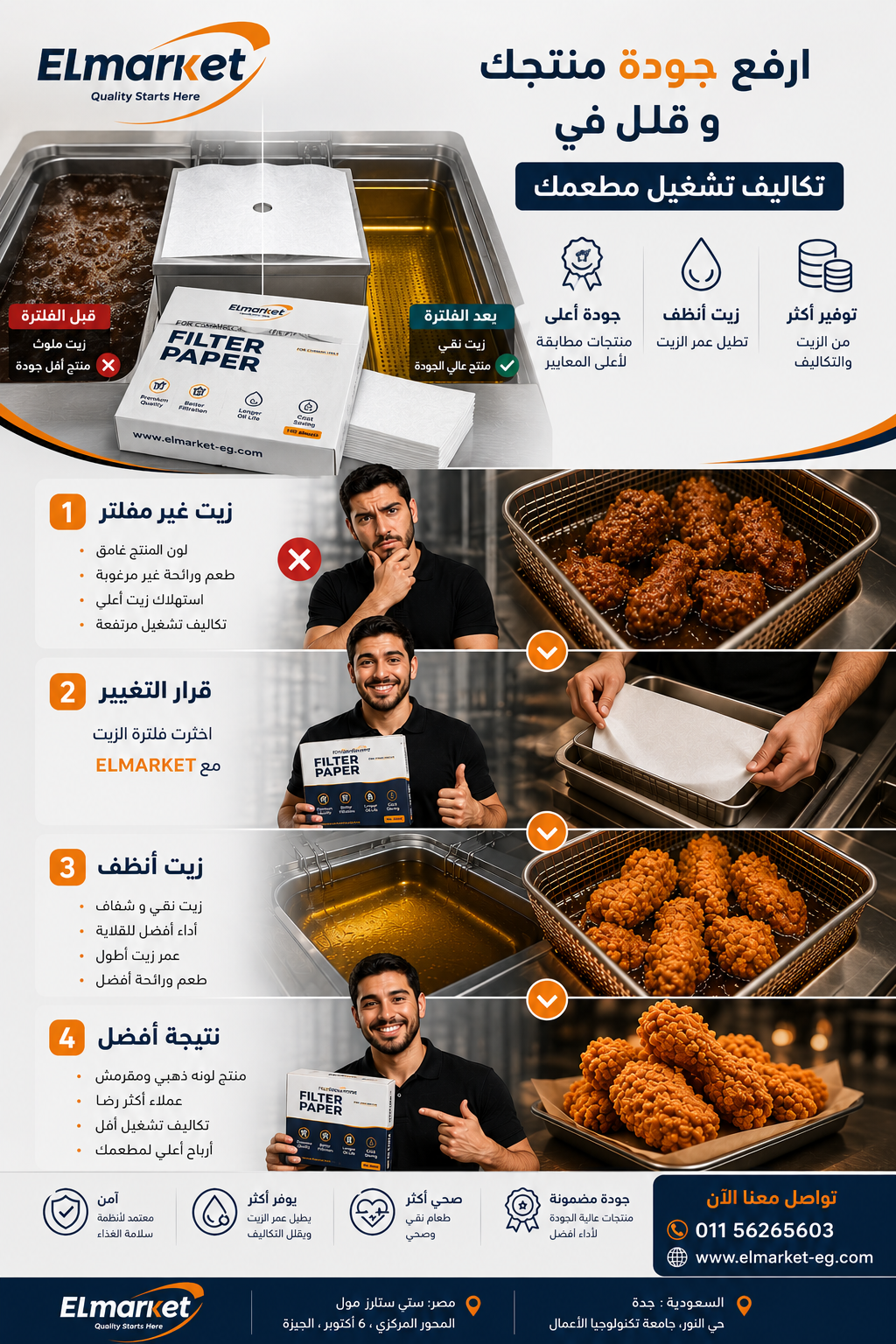
The Difference Between Filtered and Unfiltered Oil
إليك ترجمة احترافية ودقيقة للمقالة باللغة الإنجليزية، مصممة بأسلوب تسويقي جذاب (Copywriting) ومناسبة تماماً للنشر على موقعك الإلكتروني أو منصات التواصل لعملاء الـ B2B:
The Difference Between Filtered and Unfiltered Oil: How "Filter Envelopes" Revolutionize Your Food Quality and Restaurant Profits
In the restaurant and commercial kitchen industry, frying oil is both a major daily operational driver and a significant budget line item. However, many overlook a critical scientific and operational fact: unfiltered oil quickly transforms from a cooking medium into a hidden enemy that ruins food quality and drains your profits.
In this article, we will explore in detail the direct impact of using professional filter envelopes on oil cleanliness, and present a comprehensive comparison between filtered and unfiltered oil to show you the real impact on your investment.
First: What Happens to Frying Oil During Operation? (The Chemistry of Degradation)
When commercial deep fryers run for extended hours to cook broasted chicken, fries, or other appetizers, food particles and crumbs inevitably fall into the hot oil.
Under continuous high temperatures, three primary chemical processes degrade the oil:
-
Oxidation: The chemical reaction of oil with oxygen and heat, which ruins its color and aroma.
-
Hydrolysis: Triggered by the moisture in food reacting with hot oil, leading to the formation of harmful Free Fatty Acids (FFAs).
-
Carbonization: The burning of food debris settled at the bottom of the fryer, turning into black carbon specks that float in the oil and cling to newly fried batches.
Second: How Filter Envelopes Purify and Clean Your Oil
Commercial paper filter envelopes (such as those designed for Henny Penny and Frymaster systems) act as a high-precision mechanical and chemical barrier:
-
Micron-Level Mechanical Filtration: Unlike standard wire mesh strainers that only catch large crumbs, the microfibers in certified filter paper are engineered to trap the finest impurities and carbon micro-particles invisible to the naked eye.
-
Preventing Carbon Reactions: By removing these micro-particles daily, the filters halt the continuous carbonization process inside the fryer, maintaining oil clarity and purity for much longer.
-
Synergy with Filter Powder: When used alongside active filter powder, these envelopes help absorb Free Fatty Acids (FFAs) and polar compounds, preventing oil darkening and off-odors.
Third: Comprehensive Comparison: Filtered vs. Unfiltered Oil
To clarify the operational and financial contrast in your kitchen, here is the technical comparison:
| Comparison Point | Filtered Oil (Using Filter Envelopes) | Unfiltered Oil (Traditional) |
| Oil Color & Appearance | Golden, crystal clear, and completely free of suspended impurities. | Dark, muddy, and filled with floating black carbon particles. |
| Food Taste & Aroma | Fresh, clean, and crispy—free of burnt aftertaste or flavor transfer. | Acrid, burnt taste with flavor transfer from previous batches. |
| Food Color (Broasted/Fries) | Uniform, appetizing golden-brown color that attracts customers. | Dark, blotchy, or covered in unappealing black carbon specks. |
| Oil Lifespan | Doubled by 100% (lasts significantly longer in daily operations). | Rapid degradation, requiring complete disposal and replacement every few days. |
| Smoke & Foaming Rate | Minimal; the oil remains thermally stable and much safer for the kitchen staff. | Smokes quickly at standard cooking temperatures with heavy foaming. |
| Impact on Fryers | Protects heating elements and oil pumps from clogs and corrosion. | Carbon buildup at the bottom increases energy bills and causes frequent system breakdowns. |
Fourth: The Return on Investment (ROI) of Regular Filtration
Some may view buying filter envelopes as an added expense, but kitchen math proves exactly the opposite:
The Saving Formula:
If your restaurant spends $2,000 / SAR 10,000 on frying oil monthly, daily automated filtration using dedicated filters can cut this consumption by up to 50%. This translates to direct savings of $1,000 / SAR 5,000 every month—easily covering the cost of filters and powder multiple times over, and converting directly into pure bottom-line profit.
Conclusion
Clean oil is not a luxury; it is the ultimate guarantee of delivering a premium dish that keeps customers coming back while protecting your brand's reputation. Investing in genuine filter paper envelopes from ELmarket is the smartest operational step to balance food quality with massive cost savings.
Protect your food quality, cut your kitchen's operating costs, and make professional filtration the cornerstone of your daily success!